I bought the SINGER ProSeries 4-1/2 inch scissors in January 2025 for one job and one job only: snipping yarn tails. Not trimming fabric. Not cutting paper patterns. Not opening a plastic bag of coffee at a truck stop. Yarn tails. I had been using fingernail clippers for about fifteen years before that, which tells you roughly how much thought I had put into the question.
Twenty-two months later they still live in a mesh pouch in a Damero hook case that rides in my project bag, in the truck during the work week, on my kitchen table in Visalia on weekends. I drive regional routes out of the Central Valley, so a lot of my crochet happens in thirty minute breaks and the occasional ten hour. Small space, short window, tired hands. That is the context for everything below, and it is why a tool that fits in a bag matters as much to me as a tool that cuts well.
The Quick Verdict
A small, sharp, genuinely ambidextrous pair of detail scissors that has done its one job for twenty-two months without fuss. The NANO tip is the whole point and also the whole limitation: it is a yarn tool, not a fabric tool.
Amazon Check Today's Price →The pair that has lived in my truck cab for twenty-two months
4-1/2 inches, stainless steel blades, a NANO tip ground for precision, and a rubber grip that does not care which hand you use. If you have been cutting yarn with nail clippers, this is the upgrade that costs less than a skein of good cotton.
Amazon Check Today's Price on Amazon →How I've Used It
Here is the honest scope of the test. These scissors have cut cotton yarn, acrylic yarn, wool blend yarn, and the fuzzy little pill that forms where a tail has been woven in badly. That is it. They have never touched fabric, felt, paper, cardboard, plastic packaging, ribbon, wire, or a human fingernail. I have a separate pair of cheap kitchen scissors at home for that, and a box cutter in the truck for the packaging that comes with freight paperwork.
That restriction is not me being precious about a tool. It is the single most useful thing I can tell you about a pair of scissors this small. A NANO tip is a fine point ground thin so you can get under a stitch or into a tight corner. Thin and fine means the edge will not hold up to the sideways load of cutting something thick. Twenty-two months of yarn cutting and the SINGER blades still snip a tail cleanly on the first squeeze. Twenty-two months of cutting cardboard with the same tip and I would be writing a different review.
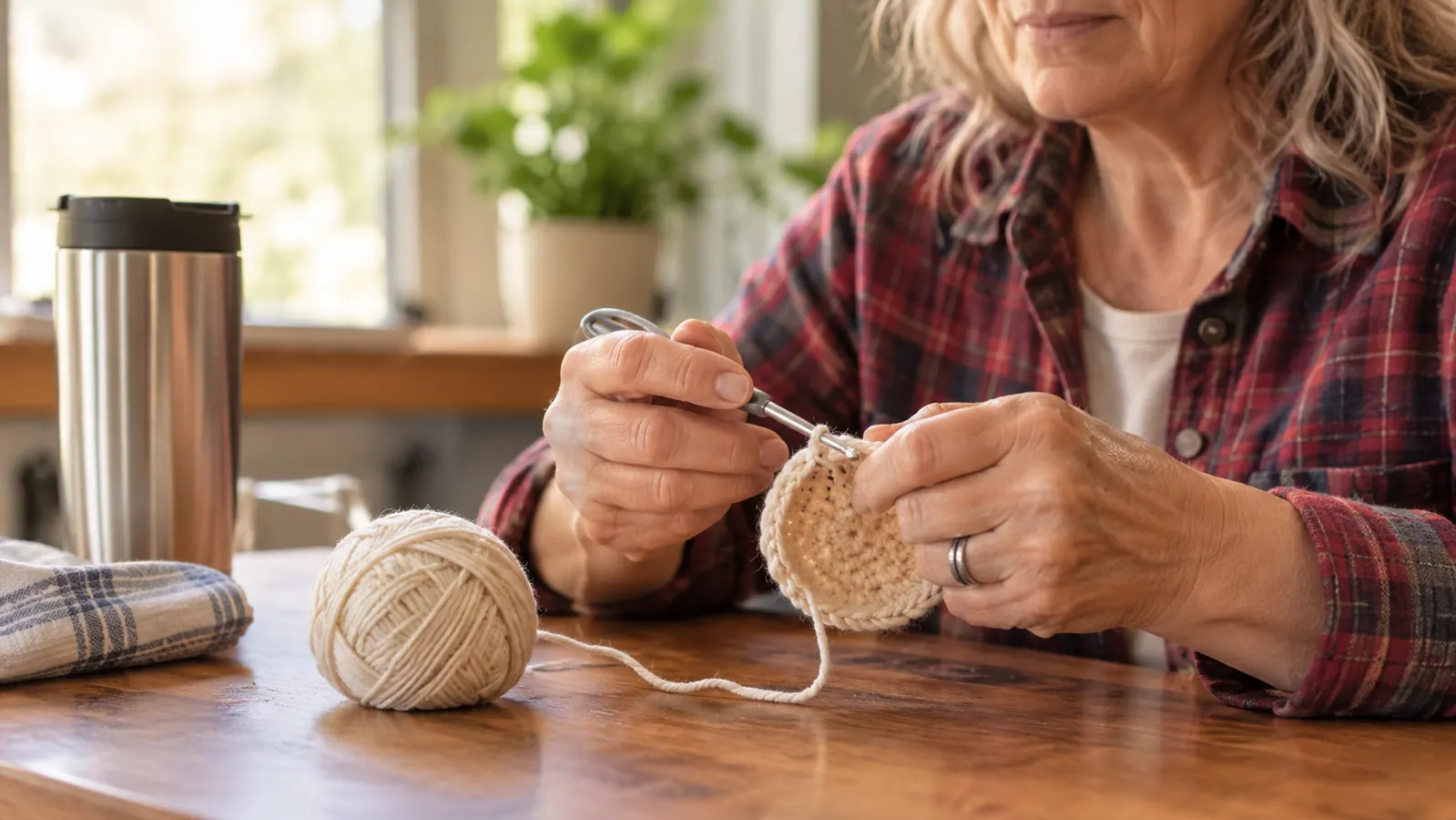
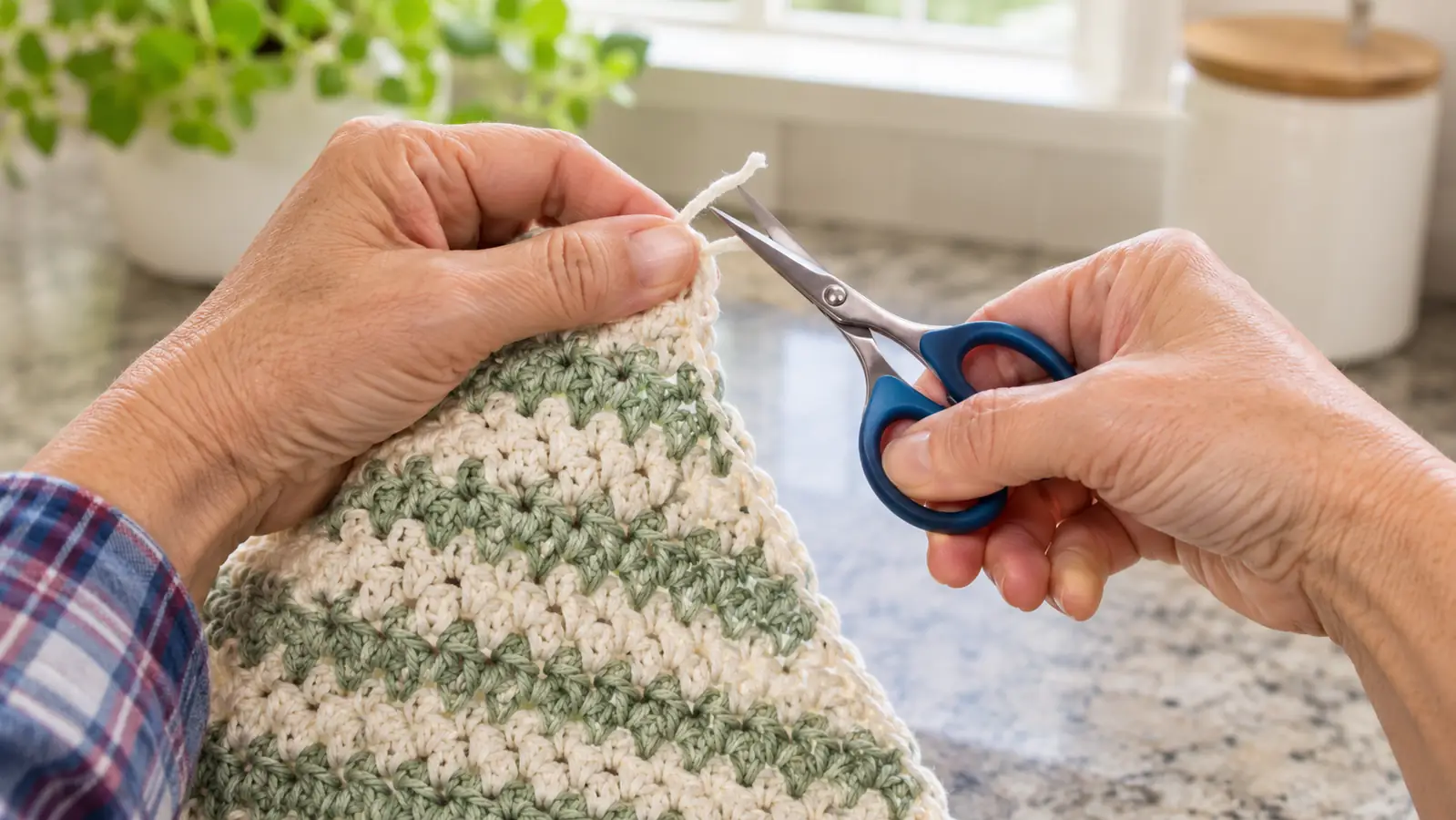
The rhythm of use is worth describing because it is where these earn their place. A tail gets snipped when I finish a round, or when I fasten off, or when I join a new ball. That is maybe forty small cuts in a two hour session and never more than a quick squeeze. The scissors sit in the mesh pouch between cuts. I do not put them down on a truck seat cushion where they would slide, and I do not leave them open.
The NANO Tip Is the Feature and the Constraint
SINGER makes a lot of scissors and most of them are bigger than this. The ProSeries 4-1/2 inch is deliberately the small one, and it is the only pair in the SINGER lineup I have any use for. The listing calls the point a NANO Tip, and what that translates to in the hand is a tip that comes to a much finer point than the stumpy little snips that come in starter kits. That fine point is why the tool works. When I have woven in an end and a stubborn quarter inch of yarn is sitting flush against the fabric, a blunt snip has to pull the yarn away from the work to get a bite on it, and pulling stretches the stitch. The NANO tip slides under and cuts without dragging the stitch out of shape.
The tradeoff is exactly what you would expect. A fine point is a point that will not survive being pried with or dropped tip-first onto concrete. I have not dropped mine, and I handle it like the thin-edged thing it is. If you are the kind of person who tosses tools into a bag loose with keys and a phone charger, this is a tool you should pouch first. The Damero mesh pouch is not a luxury for me, it is the reason the tip is still straight.
Blade edge is straight, material is stainless steel, finish is matte. At 4.63 inches long by 2.5 inches wide and 1.12 ounces, the whole thing is lighter than a set of truck keys. That lightness is not a small thing when you are holding it at an odd angle in a driver's seat on a thirty minute break. It also means it does not drag the pouch down or make the project bag heavier than it needs to be.
Sharp where it counts, small enough to disappear into a project bag
A stainless steel straight edge and a NANO tip sized for detail work. Read the listing for the current price and the review count if you want a second opinion, but mine has been in a truck cab for twenty-two months.
Amazon See the SINGER ProSeries on Amazon →The Grip, and What It Does for Tired Hands
The handle on this SINGER pair is rubber, matte, and sized for two fingers and a thumb rather than a whole hand. The listing says ambidextrous, and I believe it, because the loops are symmetrical and there is no molded right-hand thumb rest to punish you for using your left. I am right-handed. My aunt Rosa, who taught me, is left-handed, and this is the one tool in my bag I would hand her without a warning about the shape.
What the rubber grip actually does for me is subtler than comfort. After a long driving day my right thumb and first two fingers are stiff in the ordinary way that comes from gripping a steering wheel for eight hours. Nothing diagnosed, nothing dramatic, just tired. A small pair of scissors with a hard plastic handle and sharp molded edges makes that stiffness worse because you have to squeeze harder to keep control. The rubber surface on this pair does not require a hard squeeze. A light closed grip cuts a yarn tail. Nearly two years of that has not given me a single hot spot on the inside of my thumb.
I want to be careful here, because a review that promises a tool will fix your hands is lying to you. These scissors do not treat anything. They are simply shaped so that light pressure works, and light pressure is easier on a tired hand than heavy pressure. That is the whole claim and it is enough.
A fine point is why the tool works and also why it will not survive being pried with. Twenty-two months of yarn tails and the SINGER blades still snip clean on the first squeeze.
What Twenty-Two Months Did and Did Not Change
The blades are still sharp enough that I have not once had to saw at a tail. There is no nick in the edge. The matte finish has picked up a faint polish where my thumb sits, which is what matte finish does, and I consider it normal wear rather than a defect. The screw at the pivot has not needed adjusting. I have not oiled them, because I did not know I was supposed to until I read a forum thread about it, and they have not given me a reason to start.
One honest limit: cutting cotton yarn for nearly two years leaves a slight tackiness on the blade from the yarn's own fiber and whatever the mill finished it with. I wipe the blades with a dry cloth every few weeks and that handles it. I have never used water on them and I never will, because stainless steel is stainless, not rust-proof, and a pivot screw is a place water likes to sit.
The other limit is that these are not the tool you want for a big job. Trimming a finished baby blanket's worth of woven-in ends takes a session of small squeezes, and my hand notices by the end. A larger pair of snips would cut faster. But a larger pair of snips is not going to live in a pouch the size of a deck of cards, and speed is not what I am short on in a truck cab at four in the morning.
The tool I would replace first if it ever went missing
Twenty-two months, one job, zero failures. Stainless steel blades, a NANO tip for detail work, rubber grip, and ambidextrous loops that suit Rosa as well as me.
Amazon Check Today's Price on Amazon →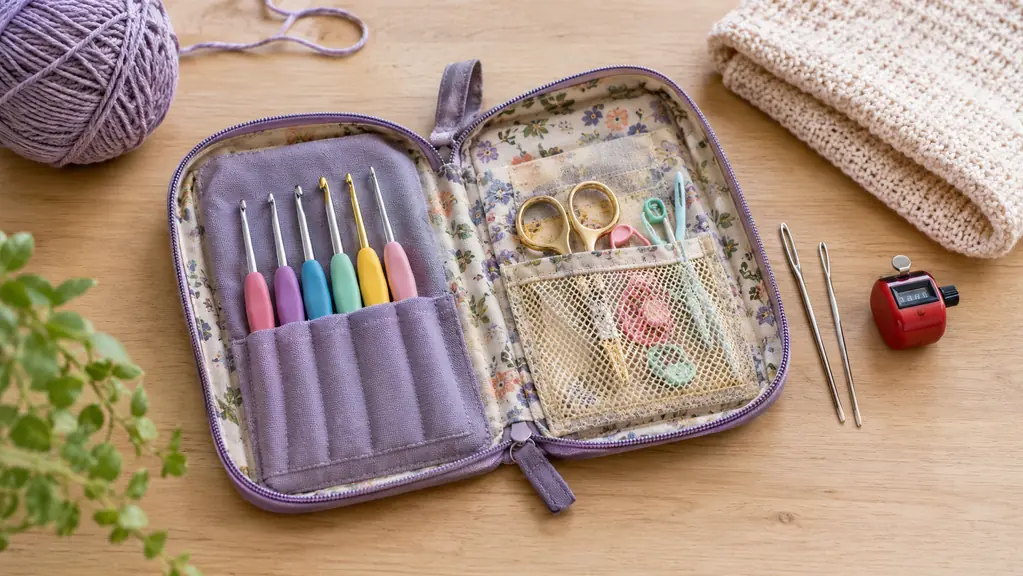
How It Compares to What I Used Before
Before January 2025 my yarn-tail tool was a fingernail clipper. It works, in the sense that a paper clip works as a bookmark. The clipper's jaw is short and the blade is curved, so on a tail sitting flush against a stitch you either leave a nub or you pull the stitch. It also has no point, which means it cannot get between a woven-in end and the fabric. I used one for years and I did not know I was working harder than I had to. That is the ordinary way people end up with the wrong tool for a job: not by choosing badly, but by never choosing at all.
The other thing in my bag that competes for the same space is my yarn needles, and they do a different job. A bent tip metal needle is for weaving an end into the fabric; the scissors are for cutting the end you have woven. The two tools are a pair. I keep two bent needles in one mesh pouch and the SINGER scissors in another, and I would not want to be without either. If you are trying to decide which to buy first, buy the needles, because you can cut yarn with your teeth at a push and you cannot weave an end in with anything but a needle.
I have looked at embroidery scissors in a yarn shop, the little ones with the curved bird-shape handles, and I have read listings for various brands. I have never owned a pair. What I can tell you from handling them for thirty seconds is that the curve is meant for fabric work and the very short blades suit clipping threads close. It is a different tool with a different purpose, and I would want one in addition to these rather than instead of them. There is a piece on this site comparing the two shapes if you are at that decision.
What I Liked
- A genuinely fine NANO tip that slides under a flush yarn tail without dragging the stitch
- Stainless steel straight edge still cutting clean on the first squeeze after twenty-two months
- Rubber grip works with light pressure, which matters on a tired hand
- Truly ambidextrous loops, no right-hand bias
- 1.12 ounces and under five inches, so it disappears into a small pouch
- Sharp out of the package and no pivot adjustment needed since
Where It Falls Short
- The fine tip will not survive being pried with or dropped point-first
- It is a detail cutter, not a fabric or paper tool, and treating it as one will dull it
- Only cuts small jobs comfortably; a blanket's worth of ends is a session of squeezes
- Blades pick up a slight tackiness from cotton yarn and want a dry wipe now and then
- Small enough to be lost if you do not pouch it
Who This Is For
You crochet in short windows and you want a tail cut clean the first time. You keep a small project bag, and you want the tools inside it to be small and light and to not need fussing over. You have been cutting yarn with something that was never designed for it, probably fingernail clippers or the blunt snips from a starter kit, and you have quietly gotten used to a nub of yarn at the end of every woven-in tail.
It also suits you if someone in your household crochets left-handed. The symmetrical loops mean one pair serves both hands, which is not true of a lot of small scissors. And it suits anyone whose hands are tired at the end of the day and who would rather not squeeze hard to make a cut. If you are shopping the SINGER brand for the first time, this is a low-risk place to start.
Who Should Skip It
Skip it if you need one pair of scissors to do everything. This pair will not cut fabric, it will not cut paper for a pattern, and it will not open packaging. If you want a single pair that does all of that, buy a pair of larger general-purpose scissors and keep them in a drawer, because a NANO tip is the wrong tool for those jobs and using it that way is how you end up with a dull point and a bad review.
Skip it if you cut a lot at one sitting and want speed. A bigger pair of snips cuts faster and you will feel the difference on a large finishing job. Skip it too if you are hard on tools and tend to toss them loose into a bag. A fine point and a bag full of keys are not a good combination, and no scissors at this size will survive that for long.
I bought mine, on Amazon, at full price, in January 2025, and nobody sent me one to review. Twenty-two months later it is the tool I would replace first if it went missing, and I would replace it with the same SINGER pair. That is the whole verdict. Not exciting, which is exactly what you want from a pair of scissors you use forty times a day. For a sense of how it fits beside the other small tools I carry, there is a piece on this site about small scissors and the crochet bag as a whole.
Buy it for the tails, not for everything
If your yarn tails have been getting cut with fingernail clippers, this is the fix. The current price is on the listing, and the review count there is a lot higher than one crocheter's twenty-two months.
Amazon Check Today's Price on Amazon →