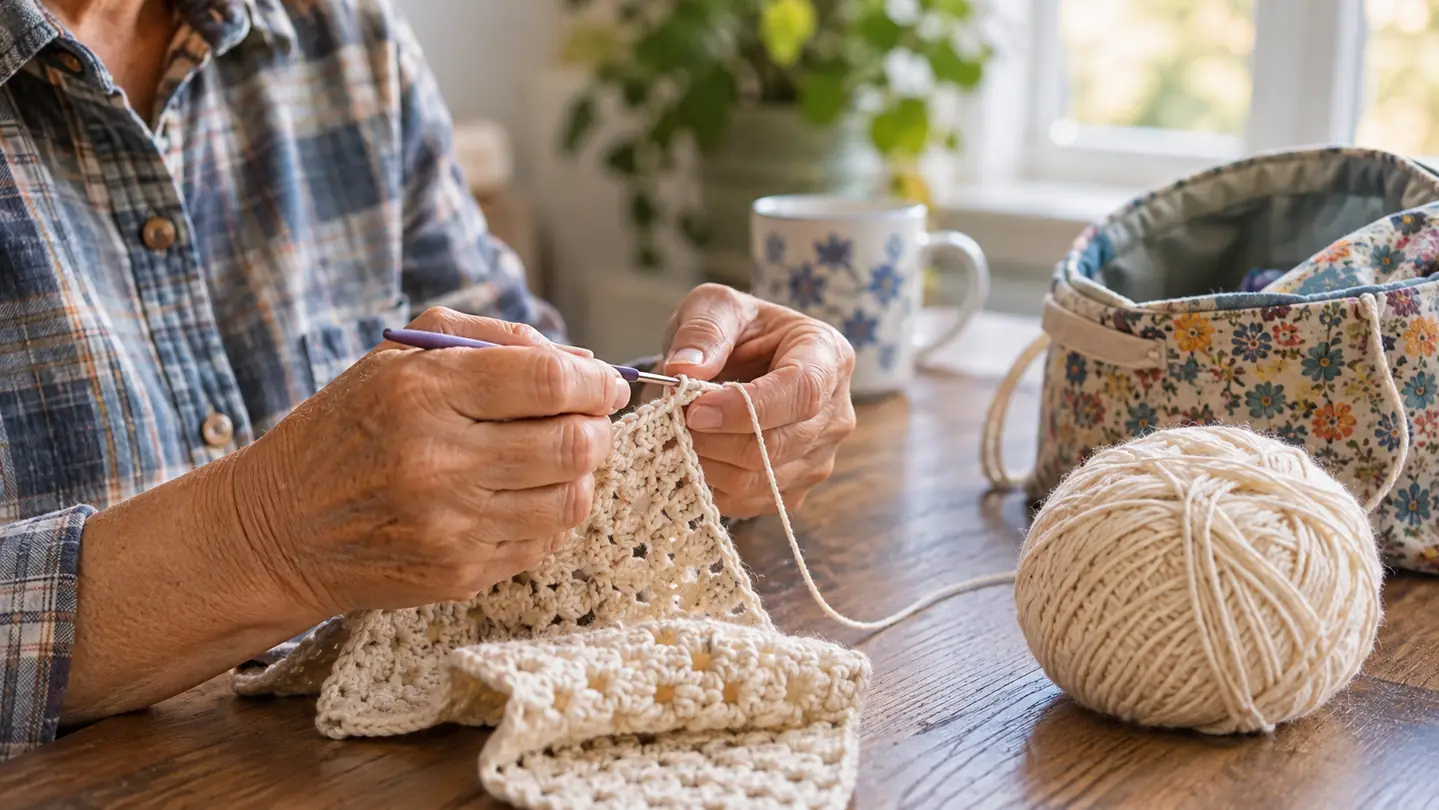
Embroidery scissors and the SINGER ProSeries 4-1/2 inch scissors are not the same tool with a different name stamped on the handle, and you find that out the first time you try to cut a thick yarn tail with a blade that was built for thread. I drive regional routes out of Visalia and I crochet on my 30 minute and 10 hour breaks, so my tools live in a small pouch inside a project bag. I bought the SINGER pair in January 2025 and it has been the only pair of scissors in that bag since. I have handled embroidery scissors in a yarn shop and read plenty of listings. Here is the plain split.
Short answer: if the things you cut are yarn tails on worsted, bulky or cotton yarn, and your hands are tired at the end of a shift, buy the SINGER pair. It has a rubber comfort grip, a straight blade edge and enough blade at 4-1/2 inches to take a thick tail in one squeeze. If you do thread work, or you regularly need to get into one tight stitch without nicking the stitch beside it, buy embroidery scissors instead. They are smaller and the points are finer, and that is the job they were made for. Most crocheters I know need the first pair. Some need both. Almost nobody needs embroidery scissors and nothing else, unless they also sew.
| SINGER ProSeries 4-1/2 inch | Typical embroidery scissors | |
|---|---|---|
| Tip and fine detail | NANO Tip on a 4-1/2 inch body, sharp and fine, listed for applique and embroidery detail | Needle points, usually finer and closer to your fingers than a longer pair |
| Reach into a tight stitch | Fine tip, but your hand sits further back on a longer handle | Short body puts your fingers right at the cut |
| Grip on tired hands | Rubber comfort grip, easy to squeeze fifty times in a row | Often bare metal loops or thin plastic, harder to hold for long |
| Cutting a thick yarn tail | Straight blade edge, one squeeze leaves a clean end | Short blades mean two or three passes and a frayed end |
| Left or right hand | Listed as ambidextrous, works either way without thinking about it | Many pairs are molded for the right hand only |
| Fitting in a project bag | 4.63 inches long by 2.5 inches wide, needs a real pouch | Usually shorter overall, slides into a side pocket or tin |
| Blade and finish | Stainless steel, matte finish, straight edge | Stainless steel, sometimes with a coated blade |
| What comes in the package | One pair of scissors, nothing else, no case or cap | Some pairs ship with a cap or small sheath |
| Best for | Yarn tails on worsted, bulky and cotton, long sessions | Thread, tiny snips, tight corners, thread work |
Where the SINGER ProSeries Wins
The grip is the first thing. The SINGER pair has a rubber handle, and the listing calls it ambidextrous, which matters more than it sounds. I hold scissors in my right hand, but I have passed them across a kitchen table to my daughter Renee and to a friend, and neither of them had to stop and work out which loop their thumb went in. Plenty of small craft scissors are molded for one hand and feel wrong in the other. The rubber also gives you something to push against when a tail is thick. After a long driving day my right thumb and first two fingers are stiff, and bare metal loops are the last thing I want to squeeze fifty times in a row. The SINGER handle is easier on that than the fingernail clippers I used before.
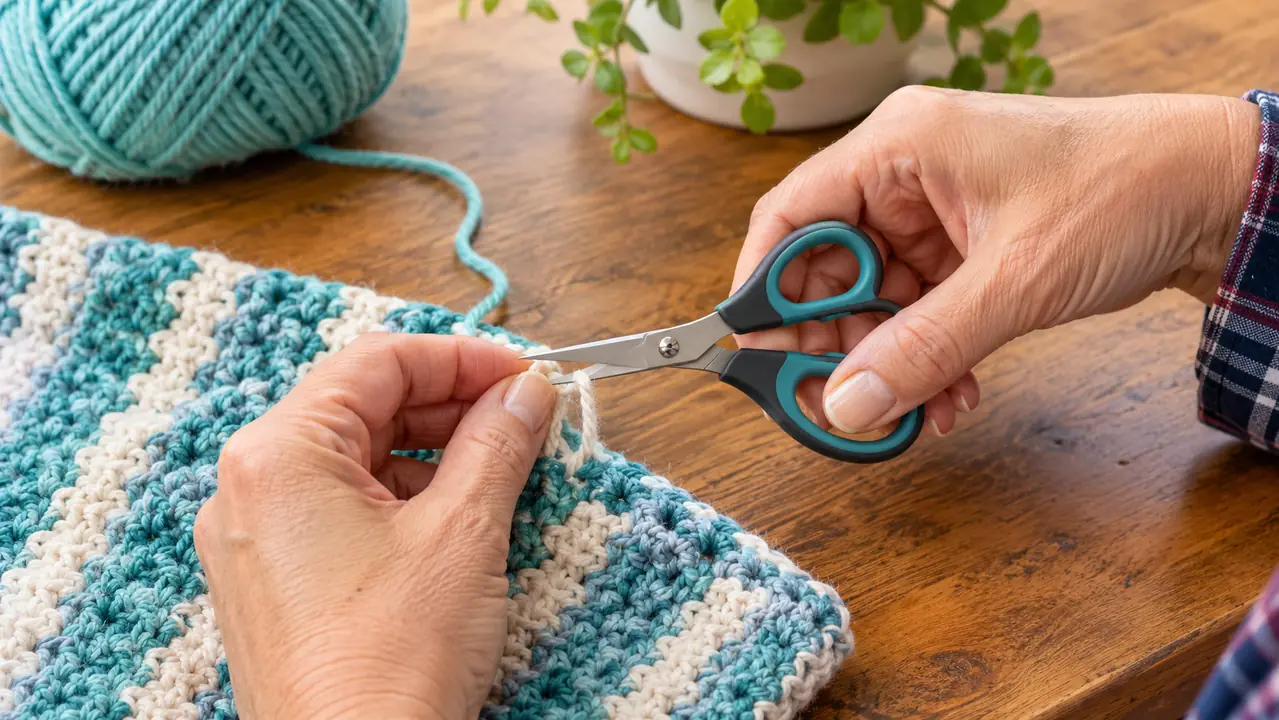
A dishcloth is where I noticed it. Forty rows of cotton, two tails per color change, and a border to finish, which is somewhere north of sixty cuts in one sitting at my kitchen table in Visalia. I did that on a Saturday in March with the SINGER pair and never once had to set it down and shake my hand out. With the clippers I used to trim with, I would get through about ten tails and then start biting at them instead, which looks about as tidy as it sounds. Between the rubber and the straight edge, the trimming stopped being the part of the project I dreaded and went back to being the two minutes at the end.
Second is the cut itself. The blade edge is straight, the point is the NANO Tip, and the length is 4-1/2 inches, longer than most embroidery scissors and shorter than a kitchen pair. That middle size is what does the work on yarn. A worsted tail takes one squeeze and leaves a clean end. With clippers I often needed two or three bites, and the end came out frayed enough that I would sit there picking at it. Stainless steel and a matte finish also mean the blades wipe clean with a tissue after a session, which I do before they go back in the pouch. One pair, listed at 1.12 ounces and 4.63 inches long by 2.5 inches wide, is the whole package.
Where Embroidery Scissors Win
The points. This one is not close. A typical pair of embroidery scissors is three to four inches overall with needles for tips, and the ones I handled in the yarn shop felt like tweezers with blades. If you need to snip a single loop of thread in a tight spot, or trim a seam end without lifting the work off the table, that is the tool. The NANO Tip on the SINGER pair is sharp and it is fine, but it sits on a 4-1/2 inch body, and that extra body puts your fingers further from the cut. For thread work, further from the cut is the wrong direction. I do no thread work, which is why I did not buy a pair. I can still see what they are for.
I handled a pair in a yarn shop in Visalia in December 2024, a few weeks before I ordered the SINGER pair, and what struck me was how little blade there was. Two short blades, needle points, and the pivot sitting right under your thumb. For thread that is exactly right. For a worsted tail it would mean opening and closing two or three times on the same tail, and every pass leaves the end a little fuzzier. I put them back on the peg because I already knew what my week looks like: dishcloths, hats, scarves, and every cut a yarn cut. That was the whole test. I did not need to buy them to know they were the wrong tool for my bag.
The second win is space. Embroidery scissors are shorter, so they slip into a side pocket of a project bag or a small tin without any planning. Mine take a mesh pouch in the Damero case alongside hooks, two yarn needles and a row counter, and that pouch is not small. There is also the sheath question. Some embroidery scissors ship with a cap or a little case, and the SINGER pair ships with nothing at all. The listing says one pair of scissors, and one pair is what arrives. If you carry scissors loose in a bag, that matters. You will want a pouch either way, so plan for one.
What the Listing Says, and What It Doesn't
Here is what the SINGER listing actually tells you, and it is worth reading as a spec sheet rather than a promise. Included components: one pair of scissors. Length 4-1/2 inches, item dimensions 4.63 inches long by 2.5 inches wide, weight 1.12 ounces. Material stainless steel, finish matte, handle rubber, blade edge straight, point style NANO Tip, hand orientation ambidextrous. The listing bullets say the pair is sized for control and precision and designed for detailed projects like applique, embroidery and other crafts that want a fine tip and a shorter blade. Product style is one pack. The warranty description reads N, so do not count on one.
One thing worth untangling before you order: the title says 4-1/2 inch and the item dimensions say 4.63 inches long by 2.5 inches wide. Those are not a contradiction. The 4-1/2 is the size SINGER uses to name the model, and 4.63 is what the pair measures end to end with the handle loops included. The 2.5 inches is across the widest part of the handles. If you are measuring a pouch to see whether it will fit, use the 4.63 and the 2.5, not the number in the name. I did exactly that with a tape measure on the bunk before the pouch arrived, and I was glad I had.
What it does not tell you: there is no case, no sheath and no cap in the box. It does not tell you the blades are for yarn only, because they are not, they will cut fabric and paper perfectly well, and that is exactly why I do not let mine near either. A pair this sharp dulls on paper and packaging, so mine cut yarn tails and nothing else. It does not tell you the grip will fix tired hands, because it will not, it is simply easier to hold than bare metal. And it does not tell you whether embroidery scissors would suit you better. No listing does. You have to know what you cut.
One pair of 4-1/2 inch scissors with a rubber grip, one job, and a mesh pouch in a project bag. That is the whole setup, and it has not changed since January 2025.
If you are still on the fence, sit down with your current project and count how many times you cut something in one sitting. If the answer is a handful of yarn tails, the SINGER pair is the tool for that count and you can stop shopping. If the answer involves thread, tight corners or a single stitch you cannot get at, look at embroidery scissors. If the answer is both, which is what I hear from people who sew and crochet, then own both and keep them in the same pouch so you stop hunting for whichever one you left at home.
If What You Cut Is Yarn and Not Thread, This Is the Pair
4-1/2 inches, NANO Tip, rubber comfort grip, ambidextrous. It ships as one pair with no case, so have a pouch ready. Mine has ridden in a project bag since January 2025.
Amazon Check Today's Price on Amazon →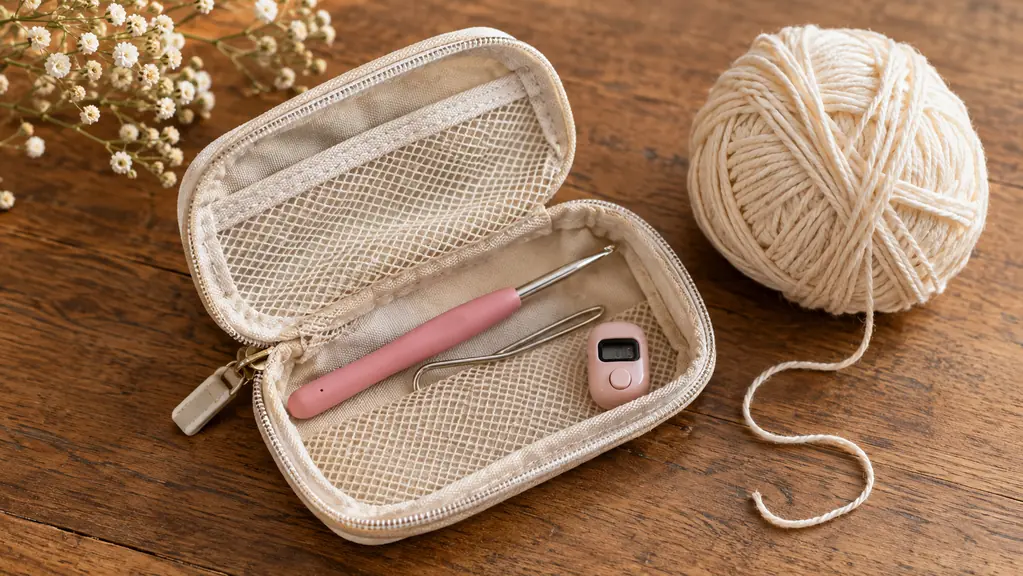
Who Should Buy Which
Buy the SINGER ProSeries if you crochet and only crochet. Dishcloths, hats, scarves, baby blankets, the ordinary stuff. Your cuts are yarn tails, your yarn is worsted or bulkier, and you want to do the trimming at the end of a row without hunting for a tool or fighting a blade that is too short. Buy it if your hands are tired and a rubber grip sounds better than metal loops. Buy it if two people in the house share one pair of craft scissors and neither of you wants to think about which hand it fits. The 4.5 inch size also does not scare anybody, which matters if there is a grandchild or a beginner at the table.
Mine lives in a Damero mesh pouch with two bent yarn needles and a row counter, and that pouch sits inside a small project bag that rides in the truck from Monday to Friday and comes home on weekends. Nothing in that bag is precious. That is on purpose. A tool you are afraid to lose is a tool you stop carrying, and a tool you stop carrying is a tool you stop using. The SINGER pair has been in and out of my bag for close to two years. The handle has not loosened, the blades still meet along the straight edge, and the matte finish still wipes clean with a tissue. That is the whole report I have on durability, because nothing has gone wrong with it.
Buy embroidery scissors instead if your cutting is thread. Cross stitch, hand sewing, mending, applique with a machine, trimming a seam you cannot lift. Also buy a pair if the only thing you ever do is snip one tight loop in the middle of a row and you want the shortest possible reach from your fingers to the blade. And buy a pair if bag space is genuinely tight and the tool has to disappear into a side pocket. What I would not do is buy embroidery scissors as your only pair and then expect them to take a chunky cotton tail in one clean squeeze. They will do it, badly, over two or three passes, and the end you get is the kind you have to trim again.
The Case for Owning Both
I own one of the two and I have told you which. I have no embroidery scissors in my pouch because I do not sew, I do not do thread work, and every cut I make in a week is a yarn tail. If I started mending Renee's things or took up cross stitch at the kitchen table, I would add a small pair and keep both in the same mesh pouch so that neither one went missing in the truck. That is not a pitch for buying two things. It is just what I would do, and it causes less trouble than reaching for the wrong blade fifty times a week and dulling it on the job it was not built for.
The Pair That Lives in the Pouch
Straight edge, NANO Tip, stainless steel, rubber handle. One pair of scissors in the package, no case included. Check the current price and read the listing yourself before you decide.
Amazon See the SINGER ProSeries on Amazon →